South Hill
Generator Repair in South Hill, WA
Diagnosis and repair for home standby and portable generators — keeping your sump pump, well pump, and essential circuits running through Pacific Northwest power outages.
- Licensed & Insured
- Free On-Site Inspections
- Pierce County–Based Team
- Fast Response Time
- No-Obligation Written Estimates
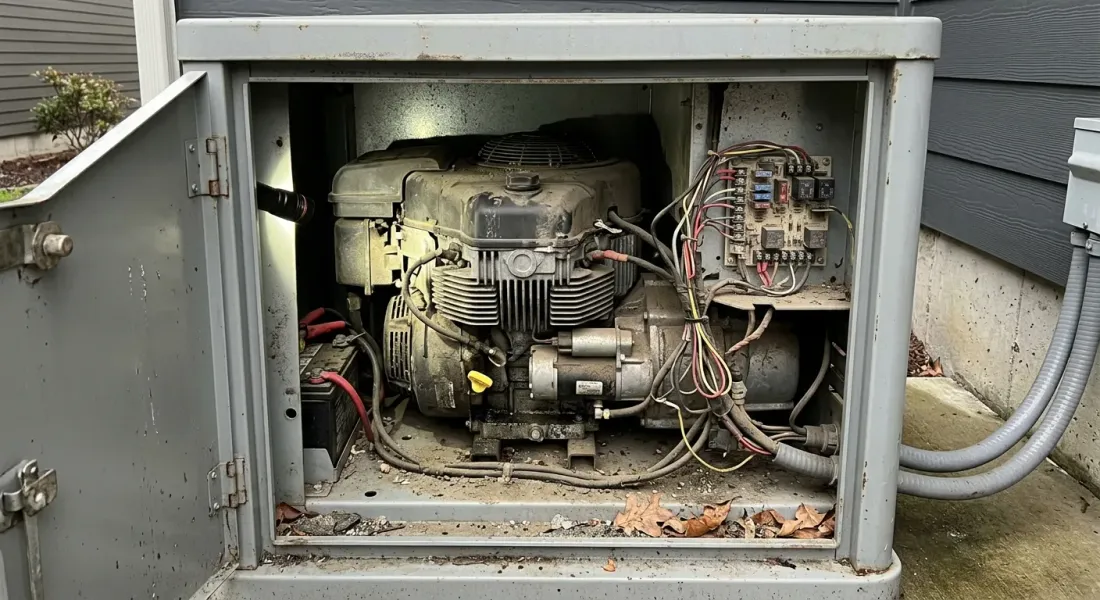
South Hill Crawl Space provides professional generator repair services throughout South Hill and the surrounding area. Our experienced technicians use proven techniques and commercial-grade materials to deliver lasting results, backed by our no-obligation written estimates.
Diagnosis and repair for home standby and portable generators — keeping your sump pump, well pump, and essential circuits running through Pacific Northwest power outages. Whether you're dealing with an urgent problem or want to address early warning signs before they become costly repairs, South Hill Crawl Space is available 24/7 to help protect your home.
What You Need to Know
Generator Repair in South Hill
Is Your Generator Going to Work When the Power Actually Goes Out?
The worst time to find out your generator has a problem is during the outage it was bought to handle. Most standby and portable units sit idle for months at a time, and a unit that looks fine sitting in the garage or bolted to a pad outside can still fail to start when the power cuts. This is the single most common complaint we hear from South Hill homeowners. The generator ran fine "last time," or passed its last self-test, and then didn't turn over during the storm that mattered.
Standby generators are built with an automatic exercise or self-test cycle specifically to catch problems before they become emergencies, but a self-test only catches what it's designed to catch. A weak starter battery, a fouled carburetor, or a transfer switch that's about to fail can still slip through. If your generator hasn't been inspected in the last 12 months, or you've never watched it carry your home's load during a real outage, you don't know if it works.
Common Reasons a Generator Won't Start
The most common no-start cause we find, especially on standby units, is a dead or corroded battery. Standby generators draw down their cranking battery slowly between outages even when the unit itself isn't running, and if it isn't part of a regular maintenance check, it can quietly go flat for months before anyone notices, usually right when it's needed most. Battery replacement is one of the simplest fixes we make, typically $50–$60 for the part plus labor.
On portable generators that sit unused for a season or more, the culprit is almost always fuel. Ethanol-blended gas left in the tank and carburetor breaks down and leaves a gummy varnish behind, clogging the tiny passages the engine needs to draw fuel through. A carburetor clean runs $80–$150; if the varnish has hardened enough to affect internal components, a full carburetor rebuild runs $150–$250.
Standby units have their own failure points beyond the battery: automatic transfer switch (ATS) faults, control board errors, and low-oil auto-shutoff sensors that trip (correctly or not) and prevent startup. These are more involved diagnoses and typically call for a trip/diagnostic visit before we can quote the repair.
Standby vs. Portable Generator Repair
Standby generators are permanently installed, run on natural gas or propane, and start automatically within seconds of a utility outage through an automatic transfer switch. Because they're wired directly into your home's electrical panel and left outdoors year-round, their failure points tend to be electrical and control-related: ATS faults, control board errors, and battery drain from sitting between outages.
Portable generators are simpler machines: gas-powered engines you start manually and connect with extension cords or a manual transfer switch. Their problems are usually mechanical: a gummed-up carburetor, a fouled spark plug, or a fuel solenoid that's stuck closed. They're generally cheaper and faster to repair, but they also require you to be home, awake, and willing to go outside and start them during a storm. Standby owners don't have that problem.
Whichever type you have, the diagnostic approach is the same: we start with a trip/diagnostic visit ($75–$150, usually credited toward the repair if you move forward) to isolate the actual fault before recommending a fix.
Repair or Replace? What It Costs
Most generator repairs in South Hill fall between $50 and $600, plus the trip/diagnostic fee. A fix like a battery swap or a carburetor clean sits at the low end; a transfer switch repair, which typically runs 3–4 hours of labor, sits in the middle; and major standby repairs (control board replacement, significant electrical faults) can run up to $2,500 on whole-home units.
As a rule of thumb, if the repair estimate approaches what a comparable new unit would cost, or the generator is well past its expected service life and has multiple issues at once, replacement is worth discussing. But most of the calls we run are straightforward: a battery, a switch, or a carburetor, not a full system failure. A written estimate after the diagnostic visit tells you exactly which category you're in before you commit to anything.
Why South Hill Homeowners Need Backup Power
South Hill sits in unincorporated east Pierce County, inside Puget Sound Energy's (PSE) service territory, an area with a documented history of multi-day outages after fall and winter windstorms. One recent regional windstorm event, with gusts around 60 mph, knocked out power to roughly 148,000 PSE customers as fir and cedar trees came down on lines, with damage concentrated toward Bonney Lake, Graham, and Carbonado, all essentially next door to South Hill. This isn't a rare event here; it's a recurring seasonal pattern.
For rural South Hill properties on private wells, an outage isn't just an inconvenience: it means no water pressure at all, since well pumps run on electricity. A generator that reliably picks up your well pump and your sump pump during an outage is doing double duty: keeping your water running and your crawl space dry during exactly the weather that causes both problems at once. If your home relies on a private well, it's worth having your generator and your well system's power needs assessed together. See our well pump repair page for what we check on that side.
Why Choose Us
Why Choose SHCS for Generator Repair?
- Licensed & Insured
- Free On-Site Inspections
- Pierce County–Based Team
- Fast Response Time
- No-Obligation Written Estimates
- Serving South Hill and 12 surrounding communities
FAQ
Common Questions About Generator Repair
Can crawl space moisture cause mold in the rest of my house?
Yes. The stack effect moves air from your crawl space upward through the floor system into living areas. Mold spores, moisture, and radon gas in an unsealed crawl space don't stay there. Homeowners often trace chronic musty smells, high indoor humidity, and allergy flare-ups to an unencapsulated crawl space. Fixing the crawl space often eliminates symptoms that other solutions couldn't.
Do you serve areas outside South Hill?
Yes — we cover all of Pierce County and surrounding areas including Puyallup, Spanaway, Graham, Bonney Lake, Sumner, Tacoma, Lakewood, and Frederickson. Call to confirm availability in your specific area.
My backup generator won't start when the power goes out — what's wrong?
Common causes are a dead or weak starter battery, stale fuel in a unit that sits unused between outages, a tripped transfer switch, or a fouled spark plug on a portable unit. If your generator is meant to be keeping a sump pump running during a storm, get it diagnosed before the next outage, not during one.
How much does generator repair cost in South Hill?
Cost depends on whether the issue is the battery, fuel system, transfer switch, or a larger mechanical fault, and whether it's a portable unit or a home standby system. A free on-site diagnosis gives you an exact, written quote before any work starts.
How often should a standby generator be serviced?
Most manufacturers recommend a full service once a year, in addition to the generator's built-in weekly or biweekly exercise/self-test cycle. Annual service typically includes an oil and filter change, battery and charging system check, air filter inspection, and a load bank test to confirm the unit can carry your home's circuits, not just start and idle. Skipping annual service is the single biggest reason we find standby units that fail during an actual outage despite passing their automatic self-tests.
Is it cheaper to repair or replace a generator?
In most cases, repair is cheaper. The majority of the calls we run are a battery, a carburetor, or a transfer switch, all in the $50–$600 range plus the trip/diagnostic fee. Replacement becomes worth considering when the repair estimate starts approaching the cost of a comparable new unit, or when an older generator is showing multiple unrelated failures at once. We'll give you a straight comparison after the diagnostic visit rather than defaulting to either option.
Do you repair Generac, Kohler, Cummins, and Briggs & Stratton generators?
Yes, we work on most major residential standby and portable generator brands, including Generac, Kohler, Cummins, and Briggs & Stratton. The diagnostic approach is largely the same across brands: isolating whether the fault is the battery, fuel system, control board, or transfer switch before recommending a repair.
How long does generator repair typically take?
It depends on what's wrong. A battery swap or carburetor clean is often done the same visit. A transfer switch repair typically takes 3–4 hours of labor. More involved standby repairs (control board replacement or electrical fault tracing) can take longer and may require a part order. After the diagnostic visit, your technician will give you a realistic timeline based on the issue and parts availability.
Why does my transfer switch fail to switch back to utility power after an outage?
This is usually a control board or sensor issue rather than a mechanical failure of the switch itself: the automatic transfer switch (ATS) relies on control signals to detect that utility power has stably returned before switching back. A stuck relay, a control board fault, or a wiring issue can all cause a generator to keep running on standby power even after the outage ends. This isn't a wait-it-out problem; it needs diagnosis, since a switch that won't return to utility power will also drain your fuel supply unnecessarily.
Related Services
You Might Also Need
Well Pump Repair
Diagnosis and repair for submersible and jet well pumps, pressure tanks, and switches, restoring reliable water pressure for South Hill's private-well homes.
Learn More →Battery Backup Sump Pump
Backup pump systems that keep working during Pacific Northwest power outages, the most common time a crawl space floods.
Learn More →Generator Repair Near You
We provide generator repair across South Hill and Pierce County. Select your area for local information:
Don't see your city? — we may still be able to help.
Contact Us
Get Your Free Estimate
Tell us about your project and we'll be in touch to schedule a free on-site assessment.
Prefer to call?
24/7 Emergency Service Available
-
Business Hours
Mon–Sat 7am–6pm
-
Service Area
South Hill, Puyallup, Spanaway, Graham & surrounding WA communities
- Licensed & Insured
- Free On-Site Inspections
- Pierce County–Based Team
- Fast Response Time
- No-Obligation Written Estimates